Mar 16, 2018 | Workers' Compensation
If you’ve been involved with an work accident that could potentially lead to a worker’s compensation claim, it’s important that you get checked out. Say, you slip and fall on some grease in the warehouse. Maybe you’re feeling alright right now, but you bumped your head pretty hard. You might feel like you can skip out on seeing a doctor, but we’re going to explain to you why you shouldn’t. No one wants their worker’s compensation claim to be denied. But, the fact of the matter is, sometimes they are. So, here’s why seeing a doctor after a work accident can be beneficial to you in the long run.
Seeing a doctor after a work accident: how doing so can save your potential claim
Getting checked out after a work accident is pretty beneficial in a number of ways. You’re learning about the potential side effects of your injury, the severity of it, but also— you’re doing another very important thing. That very important thing is ‘creating a record’. By seeing a doctor, they are creating a record of the injury, when it happened, and the severity of it. While you might not think you need to put in a claim and take some time off right now, after a day or two of taking care of the injury— you might change your mind.
Creating a record of the injury
When you see a doctor, they’ll be able to suggest a treatment plan. Before seeing them, you might have thought a good night of sleep and a bit of ice can do the trick. But, say you have a concussion, or whiplash, or a sprain. Those types of injuries might require a chiropractor, a follow-up visit, medications, or physical therapy. The good thing about a worker’s compensation claim is that it covers all of those things. Any injury that requires medical intervention is typically costly. If you were the victim of a work accident— you should not be liable for paying for treatment.
But, that’s starts with seeing a doctor and creating that record
Maybe you want to take a week; sit on the potential claim and decide if that’s the route you want to take. This is ultimately only a viable options when you have that record from the day of the doctor’s visit. Worker’s compensation claims can be seamless, or they can come with difficulties. Ultimately, it all depends on how timely you are. We wish you luck in dealing with your worker’s compensation claim and injury.
Jan 30, 2014 | Personal Injury, Uncategorized, Workers' Compensation, Wrongful Death
According to S.C. SECTION 42‑5‑10, Workers’ Compensation states that it is up to the employer to secure payment of compensation to the extent of liability.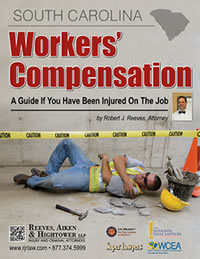
Specifically, the statute states that “Every employer who accepts the compensation provisions of this Title shall secure the payment of compensation to his employees in the manner provided in this chapter. While such security remains in force he or those conducting his business shall only be liable to any employee who elects to come under this Title for personal injury or death by accident to the extent and in the manner specified in this Title.” S.C. SECTION 42‑5‑10
In other words, what Workers’ Compensation really is, is an insurance policy that your employer essentially takes out on you when they have a certain amount of employees in working for their company. The employers pay out to the Workers’ Compensation, in the event that a person is injured on the job.
Most states will assess the damages occurred to the employee who was injured while working within the scope of their employment. In the event that an employee is injured while working on the job, they will be entitled to recover for their personal injury, or the estate for a death of the employee, only to the extent of the injury.
This places no blame on the employer, and then business is only liable to the employee who utilizes the statutes for recovery.
If you have been injured while on the job, contact the law offices of Reeves, Aiken, and Hightower, LLP toll-free at 877-374-5999 for more information on compensation options.
Mar 7, 2013 | Uncategorized, Workers' Compensation
In the workers’ compensation appeal, Williams v. Stafford Drywall, the South Carolina Supreme Court addressed questionable evidence of plaintiff’s compensation rate and medical causation testimony. The entire opinion can be downloaded here, Williams v. David Stafford Drywall.
Williams worked for Stafford Drywall as a drywall finisher in the Charleston area. While on the job, she was injured when she fell off a ladder, falling 12-14 feet. In her initial Form 50, she claimed injury to her left ankle bone, pelvis, right foot, left foot, right hip, and left hip. Six months later, she amended the form 50 to claim injury to her left hip, left leg, pelvis, right leg, back, brain, head, and left foot. Eighteen months later, she claimed injury to her left hip, left leg, pelvis, right leg, back, brain, head, left foot, and her bowels and bladder.
The single workers’ compensation commissioner found that she was totally and permanently disabled and awarded her lifetime medical treatment for the injuries to her back, left leg, and pelvis. Williams appealed to the Workers’ Compensation Appellate Panel. The Appellate Panel affirmed the single commissioner’s order in its entirety.
Williams then appealed to the South Carolina Court of Appeals claiming that the Appellate Panel erred in not finding a higher compensation rate, not finding that her neurogenic bladder issue related to her on the job injury, and not finding that she was not partially paraplegic.
The most interesting part of this appeal is the comp rate. Williams like many small construction business employees was not employed every day or every week. Section 42-1-40 of the South Carolina code provides:
[a]verage weekly wage’ must be calculated by taking the total wages paid for the last four quarters . . . divided by fifty-two or by the actual number of weeks for which wages were paid, whichever is less.
It appears evidence was not presented on how many weeks Williams actually worked. The evidence presented on the compensation rate was limited to the employer’s Form 20 (here’s a blank form 20) and some testimony form both sides. Plaintiff did not submit documentary evidence, e.g. pay stubs, to prove the number of weeks worked. However, there was testimony from both employer and employee that Williams did not work every week.
The statute clearly provides that the usual method for calculating the comp rate is to divide the pay for the year before the injury by the lesser of 52 or the number of weeks worked, but the workers’ compensation commissioner rather than making a best guess as to the number of weeks worked, just divided by 52. While an argument could be made that dividing by 52 would provide the more reasonable approximation of future income earning potential, that was not what was being done explicitly. The Appellate Panel let the decision on how to calculate the comp rate stand without question, and the South Carolina Court of Appeals found substantial evidence to leave it alone.
The Court of Appeals also affirmed the finding that the plaintiff’s neurogenic bladder problems were not medically caused by the accident for the purposes of workers’ compensation. The bladder issue in this case was not raised until over a year after the accident and claim were filed, but there was medical testimony that the bladder condition was caused by the accident. The Court of Appeals recited that the single commissioner and Appellate Panel have discretion in weighing the evidence, and need not abide by expert testimony when there is other competent evidence on point. Potter v. Spartanburg Sch. Dist. 7, 395 S.C. 17, 23, 716 S.E.2d 123, 126 (Ct. App. 2011). This is another example of the wide latitude the Workers’ Compensation Commission has in deciding cases and the relative lack of court oversight.
If you, or someone you know has been involved in an accident on the job, contact the offices of Reeves, Aiken, and Hightower, LLP to have your South Carolina claim evaluated. With over 23 years experiences, Mr. Reeves has been exposed to numerous work-related cases in which Worker’s Compensation was to be applied and is competent to handle your case. Call today at 803-548-4444 or toll free at 877-374-5999
Jan 21, 2012 | Car Accidents, Personal Injury, Uncategorized, Wrongful Death
1 killed in tractor-trailer accident on I-85 in Rowan County
by GREG ARGOS / NewsChannel 36
Posted on January 18, 2012 at 5:54 AM
Updated Wednesday, Jan 18 at 10:59 AM
SALISBURY, N.C. — The North Carolina Highway Patrol has reopened two lanes of Interstate 85 south in Rowan County after one person was killed in a tractor-trailer accident Wednesday morning.
“This was not our standard accident. We don’t like to see anything like this,” said Deborah Horne, a spokesperson with the Rowan County Fire Marshal’s Office.
The highway patrol says Garry Darnell Wilkerson, a UPS Freight truck driver, crashed a double trailer near exit 79, flipping the truck over the bridge onto McCanless Road below I-85 and leaving one of the trailers dangling off the overpass.
Authorities say Wilkerson, 58, appears to have not been wearing a seat belt and was ejected from the truck when it went off the overpass. No other injuries were reported. A spokesperson for UPS Freight says his company is looking into the possibility that a front tire blowout caused the crash. That same spokesperson called Wilkerson “a veteran driver” with a clean driving record.
UPS Freight says the tractor trailers were not carrying anything hazardous. The driver was mainly transporting cigarettes from Virginia to Charlotte. The North Carolina Highway Patrol and UPS Freight confirm that some of those cigarettes may have been looted by drivers passing by the scene immediately after the crash.
“Some officers from the Sheriff’s Department assisted us by guarding the cargo because we did have some cigarettes that spilled over. Of course, we don’t want any looting obviously. At that point our job is to protect the owner of the cargo,” said Sergeant Barry Hower.
DOT crews have reopened the two right lanes on I-85, but the two left lanes remain closed as they work to clear the scene.
Troopers are advising commuters to get off of I-85 south at exit 79 and use U.S. 29 as an alternate route.
Troopers also said McCanless Road will remain closed for the rest of the day.
We thank NewsChannel 36 for their story showing what can happen in a moment on our highways. We hope everyone who reads this article sees the damage that can quickly occur and slows down. Be Safe. Get Home.
At Reeves, Aiken & Hightower, LLP, all of our attorneys are trial lawyers. Whether it is criminal or civil, our litigators are regularly in Court fighting for our clients. Two of our firm’s partners, Art Aiken and Robert Reeves, are lifetime members of the Million Dollar Advocates Forum. Mr. Reeves has also been named one of the Top 100 lawyers for South Carolina in 2012 by the National Trial Lawyers Organization. Our attorneys include a former SC prosecutor, a former public defender, a former NC District Attorney intern, a former Registered Nurse (RN), and former insurance defense attorneys. As a result of their varied backgrounds, they understand the criminal, insurance defense, and medical aspects of complex cases. We welcome an opportunity to sit down and personally review your case. Call us today for a private consultation. www.rjrlaw.com
Jan 21, 2012 | Car Accidents, Personal Injury, Uncategorized, Wrongful Death
18-wheeler crash prompts cell phone usage ban for truck drivers
Posted: Sep 13, 2011 10:31 PM EDTUpdated: Sep 13, 2011 10:32 PM EDT
MONTGOMERY, AL (WSFA) –
He made a call that lasted just one second, but the crash that followed killed 11 people.
The accident happened in March of 2010 on an interstate in Kentucky. A hearing revealed that the truck driver from Jasper, Alabama was making a call on his cell phone.
Kenneth Laymon’s truck crossed the median and crashed into a van carrying a Mennonite family.
After that horrific crash, a national highway safety agency wants states to ban texting and hand-held cell phone use by truckers and commercial drivers when they’re behind the wheel.
Alabama has no such law, but the Alabama Trucking Association would like to see one and not “just” for big rig drivers.
Folks at the trucking association have been working with legislators to pass a law banning hand held communication devices for all drivers. They say the problem affects everyone.
And one truck driver couldn’t agree more.
“It’s definitely gotten worse through the years,” says Leo Chenevert.
Chenevert’s been behind the wheel of a truck for more than 30 years. He remembers when pay phones were the only way to call home.
“If a driver had to pull over to use a pay telephone, he wouldn’t be running through the median strip running over people.”
He admits he’s used a cell phone while driving.
“But it’s short and sweet, to the point, and I’m done.”
“Everyone needs to be banned from using a cell phone or at least texting while driving,” says Gene Vonderau with the Alabama Trucking Association.
He says the burden doesn’t just fall on truck drivers. He believes all motorists should be held to the same standard.
“It’s a danger to everyone on the road.”
The recommendation by the National Transportation Safety board to ban truck drivers’ hand held cell phone use will now go to the Federal Motor Carrier Safety Administration and all 50 states for action.
“We hope that maybe in the next session it will happen,” says Vonderau.
“We’ve become so dependent on electronic devices…we’re our own worst enemy,” adds Chenevert.
He says he can always spot a driver using a phone–they’re usually not going the speed limit.
His suggestion? Get a hands-free device.
Federal law already bans cell phone use for any truck drivers carrying hazardous goods.
At Reeves, Aiken & Hightower, LLP, our accomplished trial attorneys have over 70 years combined trial experience and stand ready to hold trucking companies and their drivers fully responsible when their negligence causes serious injury and death. We welcome the opportunity to sit down and personally discuss your case. Compare our attorneys’ credentials to any other firm. Then call us for a private consultation. www.rjrlaw.com

